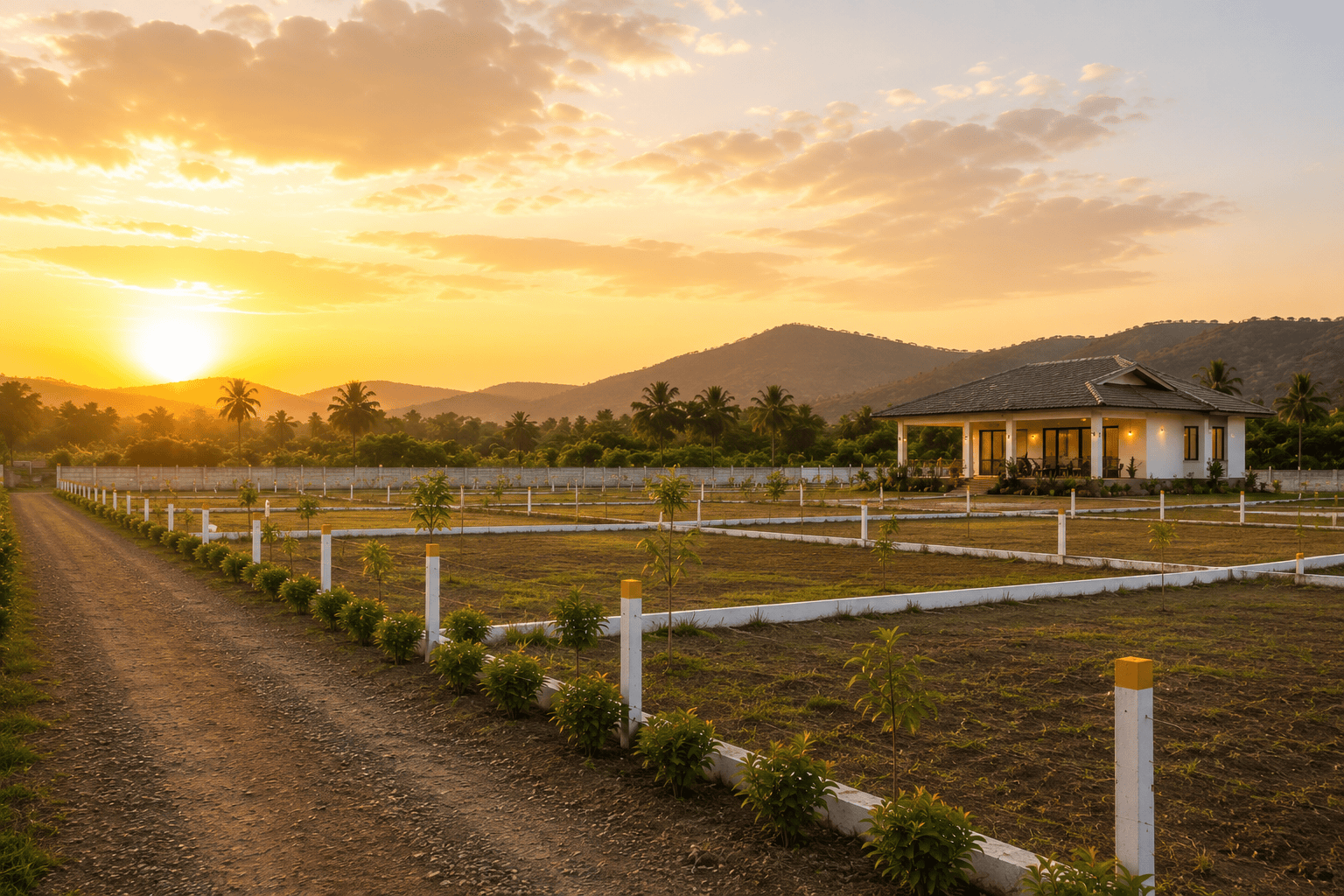
Ask five people where to buy farmhouse land near Pune and you'll get five different belts recommended — but three names come up more than any other: Vanjale, Sangavi, and Bhor. All three sit within roughly 40 km of the city along the Sinhagad Road–Velhe corridor, yet they differ meaningfully in plot type, pricing pattern, and what you're actually buying. This guide compares all three so you can match the belt to what you actually want from a farmhouse.
The Three Belts at a Glance
| Belt | Distance from Pune | Land Type | Best Suited For |
|---|---|---|---|
| Vanjale | ~40 km | Planned farmhouse layout, table-top plots | Larger parcels, structured development |
| Sangavi (Bhor Taluka) | ~30 km | Agriculture land, road-touch parcels | Flexible sizing, lower entry budget |
| Bhor Town | ~35–40 km | Mixed — near-town plots and outlying farmland | Access to markets, hospitals, schools |
Vanjale: Planned, Table-Top Farmhouse Layouts
Vanjale Gaon, off Velhe Road, has become known for larger, developer-planned farmhouse projects with demarcated plots, table-top (flat, buildable) land, and layouts designed specifically for farmhouse construction rather than raw agricultural use.
- Plot sizes: Typically start around 10–11 gunthas in planned layouts.
- Terrain: Predominantly table-top, reducing levelling costs before construction.
- Best for: Buyers who want a ready-to-plan farmhouse plot with demarcation, road access, and basic infrastructure already worked out.
Sangavi (Bhor Taluka): Scenic, Flexible-Size Agriculture Land
Sangavi sits within Bhor Taluka and is generally sold as agriculture land rather than a pre-planned farmhouse layout, which gives buyers more flexibility on plot size — though it also means more due diligence is needed on classification and construction permissibility.
- Plot sizes: Often available from smaller sizes (around 2 gunthas upward), useful for buyers with a tighter budget.
- Terrain: Generally table land with road touch in several pockets; water availability tends to be a stronger selling point here given the surrounding geography.
- Best for: Buyers prioritising scenic surroundings and flexible sizing over a fully planned layout.
Bhor Town: Closer to Civic Infrastructure
Bhor is a taluka headquarters, which means land near the town itself sits closer to markets, schools, and basic healthcare compared to more remote farmhouse belts. Plots further from the town centre, toward surrounding villages, revert to a more typical rural farmland profile.
- Plot sizes: Varies widely — smaller near-town plots to larger outlying agricultural parcels.
- Terrain: Mixed; check individual plots rather than assuming a uniform profile across the taluka.
- Best for: Buyers who want a farmhouse feel without being fully cut off from town amenities.
What Actually Differentiates These Belts
1. Road Access
Main-road-touch plots command a premium in all three belts. Interior plots reached via unpaved or narrower approach roads are cheaper but should be checked carefully — especially for monsoon accessibility.
2. Water Availability
Water sourcing (borewell, well, or nearby stream) is highly plot-specific rather than belt-wide. Always ask for an on-site demonstration of a working water source rather than relying on general claims about the area.
3. Layout vs. Raw Agricultural Land
Planned layouts (more common in Vanjale) typically come with demarcation, internal roads, and sometimes basic utilities already worked out. Raw agricultural land (more common in parts of Sangavi and outlying Bhor) can be more affordable but places more verification responsibility on the buyer.
4. Construction Classification
Not all farmhouse land carries the same construction permissions. Some parcels are NA-converted, others fall under specific farmhouse/agricultural-use provisions. This is a legal detail worth confirming with a lawyer for the specific plot you're considering, not assumed from general belt reputation.
Buyer Checklist Across All Three Belts
- 7/12 Extract: Confirm current ownership and land classification.
- NA Order or Applicable Land-Use Approval: Confirm what construction is legally permitted.
- Title Chain: Verify ownership history, ideally with a property lawyer.
- Road Access in Writing: Don't rely on verbal assurance of a "shared access road."
- Water Source Demonstration: See it working on-site, not just described.
- Site Visit in Two Seasons: Once dry, once during or right after monsoon if possible.
Frequently Asked Questions
Final Word
There's no single "best" belt among Vanjale, Sangavi, and Bhor — only the belt that best matches what you're optimising for. If you want a planned, ready-to-build farmhouse layout, Vanjale is worth prioritising. If flexible plot sizing and scenic surroundings matter more, look closely at Sangavi. If you'd rather not be too far from town amenities, evaluate plots nearer Bhor town itself. Whichever you choose, the legal checklist stays the same — verify before you commit.

Vinod Pawar
Founder & Managing Director · Qualified Civil Engineer
Vinod brings hands-on experience in land development and legal due diligence across Maharashtra, and personally oversees documentation checks for every Aashraya Properties project.