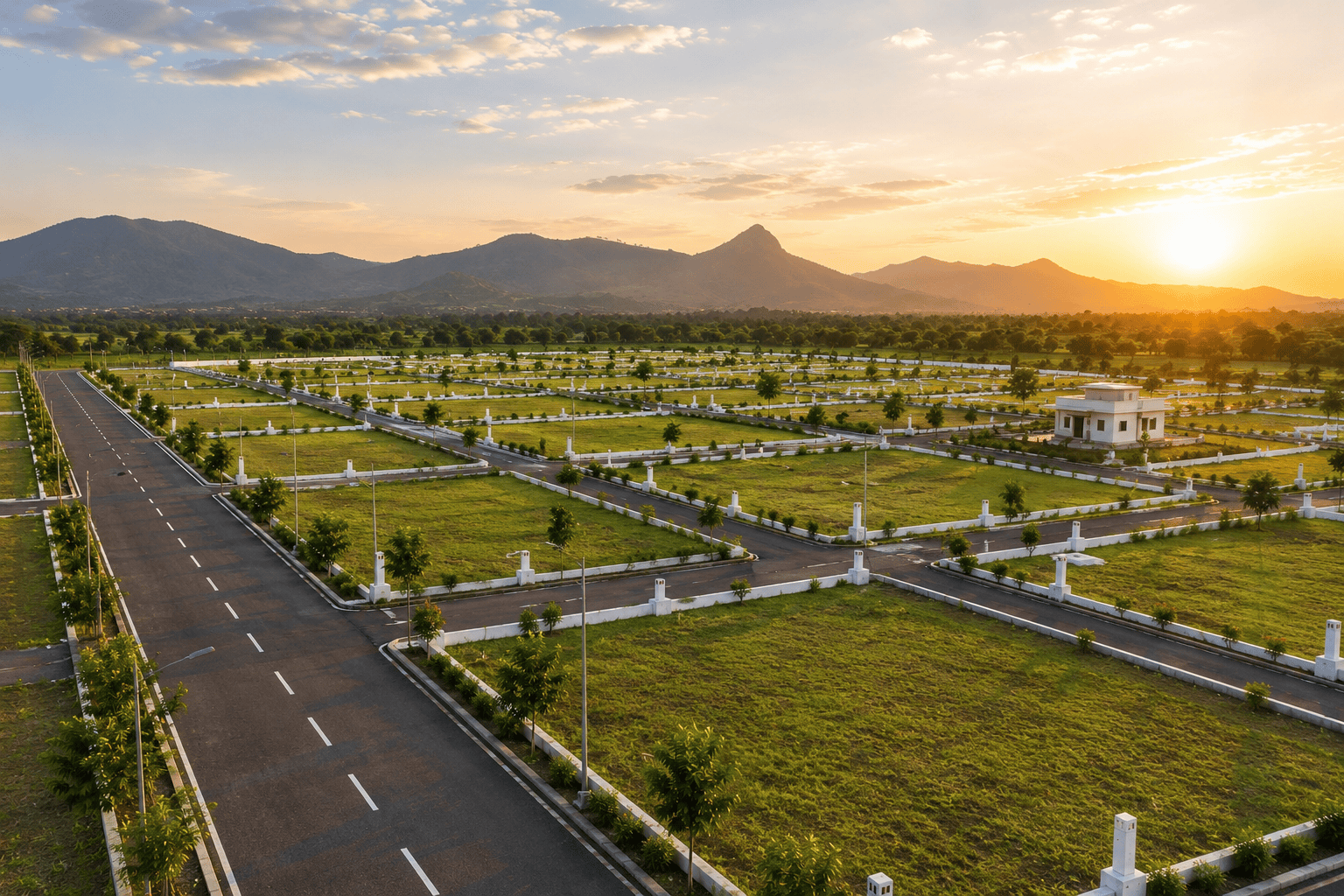
If you've been searching for a plot near Pune that doesn't stretch far beyond ₹15 Lakhs, you've probably already run into two terms again and again: NA plot and Sinhagad Road / Velhe belt. This guide walks through what both actually mean, what realistic pricing looks like in this corridor, and — most importantly — the exact documents and checks that separate a safe purchase from a legal headache later.
What Exactly Is an NA Plot?
NA stands for Non-Agricultural. In Maharashtra, land is classified as agricultural by default, and it legally cannot be used for residential or commercial construction unless the Collector's office issues an NA order converting it to non-agricultural use. This order is what makes a plot "buildable" in the eyes of the law.
Buying land without this conversion — even if it's fenced, plotted, and marketed as a "residential plot" — can leave you unable to get construction permissions or a home loan later. This is the single most important distinction to understand before you shortlist any plot in this price range.
Why the Sinhagad Road & Velhe Belt?
This corridor, stretching from the outer end of Sinhagad Road through Hingne Khurd and further toward Velhe, has become a popular hunting ground for budget plot buyers for a few practical reasons:
- Distance-to-price trade-off: Land further from the highway and closer to the ghat sections tends to be priced lower per guntha than plots closer to the city core.
- Scenic, low-density surroundings: The belt sits close to the Sinhagad fort range, appealing to farmhouse and weekend-home buyers as much as residential buyers.
- Improving road infrastructure: Ongoing road-widening and connectivity work in parts of this corridor has made several pockets more accessible than they were a few years ago.
What Does ₹15 Lakhs Actually Buy You Here?
Pricing in this belt varies by village, road frontage, plot shape, and how "table top" (flat and buildable) the land is. As a general pattern rather than a fixed rate:
| Plot Profile | Typical Fit for ₹15L Budget |
|---|---|
| 1–2 guntha NA plot, interior road | Often achievable |
| 2–3 guntha NA plot, main road touch | Possible at the edge of budget |
| Table-top farmhouse plot (5+ guntha) | Usually requires a higher budget |
| Corner plot / prime road-touch land | Typically above ₹15L |
Rates shift with market conditions, so treat this as a starting framework — not a quote. Always request a current per-guntha rate in writing from the seller and compare at least two or three plots in the same village before deciding.
The Legal Checklist Before You Book
This is the part most first-time buyers rush through — and the part that protects your money the most. Before paying any token amount, confirm the following:
- 7/12 Extract: Confirms current ownership and land classification (agricultural vs. NA).
- NA Order: The actual Collector's order converting the land to non-agricultural use — ask to see the original, not just a photocopy.
- Title Chain: A record of ownership transfers going back several years, ideally verified by a property lawyer.
- Encumbrance Certificate: Confirms the land is free of loans, mortgages, or pending litigation.
- Layout / Approved Plan: If the plot is part of a larger layout, check that the layout itself is sanctioned.
- Gunthewari Regularization: If the area was historically developed informally, confirm it has been regularized under gunthewari rules.
- Road Access & Utilities: Get written confirmation of legal road access, and check on-ground for water and electricity availability.
Common Mistakes Budget Plot Buyers Make
- Booking based only on a broker's verbal assurance without seeing the NA order.
- Not confirming the exact plot boundaries with demarcation markers on-site.
- Assuming "gunthewari" and "NA" mean the same thing — they don't, and each carries different implications.
- Skipping a site visit during monsoon, when water-logging or approach-road issues are most visible.
- Paying a large token amount before a lawyer has reviewed the title chain.
What to Check on Your Site Visit
Once documents look clean, a physical site visit still matters. Walk the actual boundaries with the seller or their representative, check the approach road condition, ask neighbours or nearby landowners about water table depth, and photograph boundary markers for your own records. If possible, visit once in dry weather and once during or right after rain.
A Note on Financing
Bank financing for plot purchases — especially smaller NA plots in developing belts — can be more restrictive than for ready flats. Many buyers in this price range purchase outright or through developer-linked payment plans. If you do plan to use a loan, confirm with your bank in advance whether the specific plot and its documentation will qualify, since NA status and clear title are usually non-negotiable requirements for lenders.
Frequently Asked Questions
Final Word
A budget of ₹15 Lakhs can absolutely get you a legitimate NA plot in the Sinhagad Road and Velhe belt — but the deciding factor is never just the price, it's the paperwork. Treat the NA order and title chain as non-negotiable, visit the site more than once, and work with a team that can verify documents on your behalf rather than relying solely on broker assurances.

Vinod Pawar
Founder & Managing Director · Qualified Civil Engineer
Vinod brings hands-on experience in land development and legal due diligence across Maharashtra, and personally oversees documentation checks for every Aashraya Properties project.