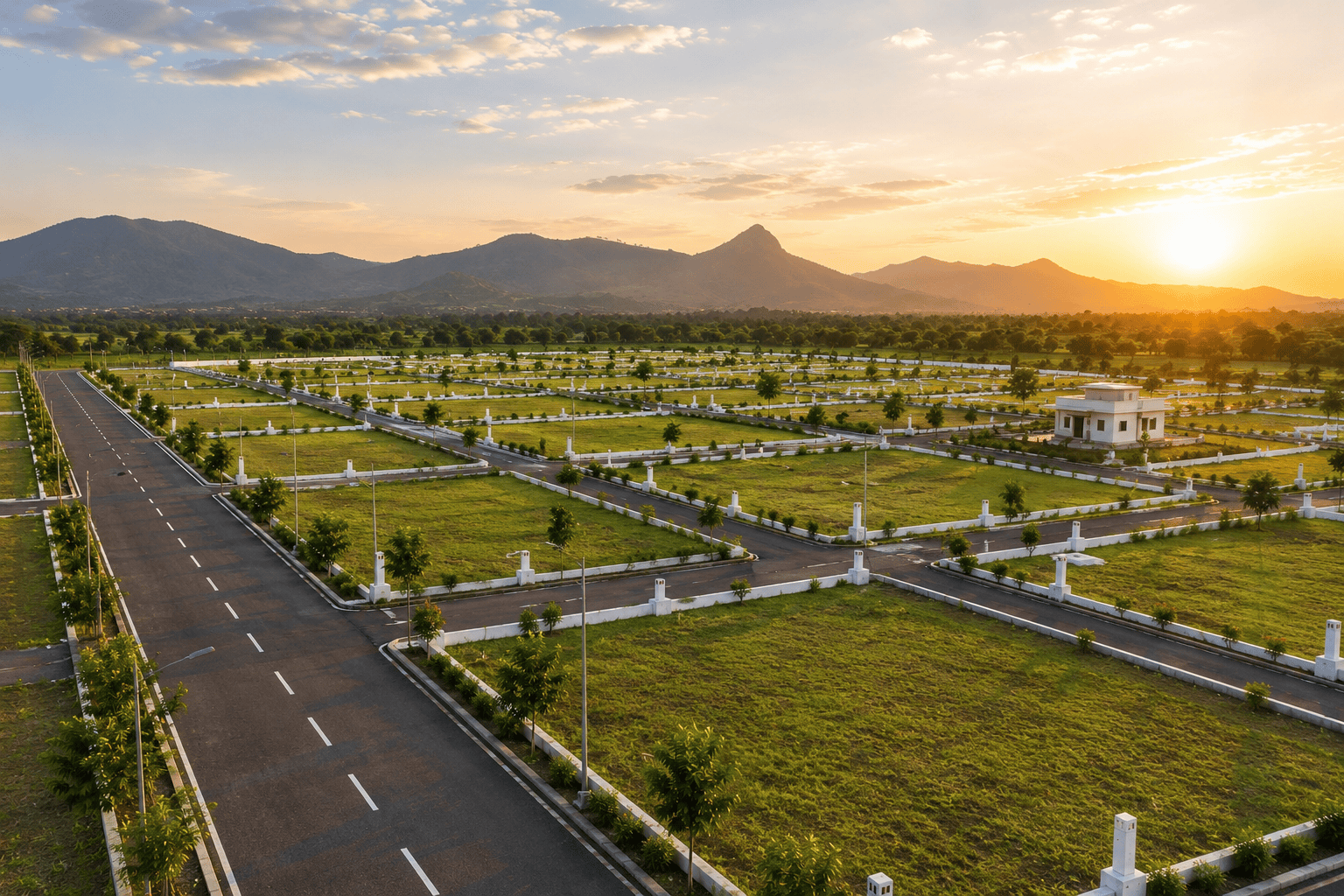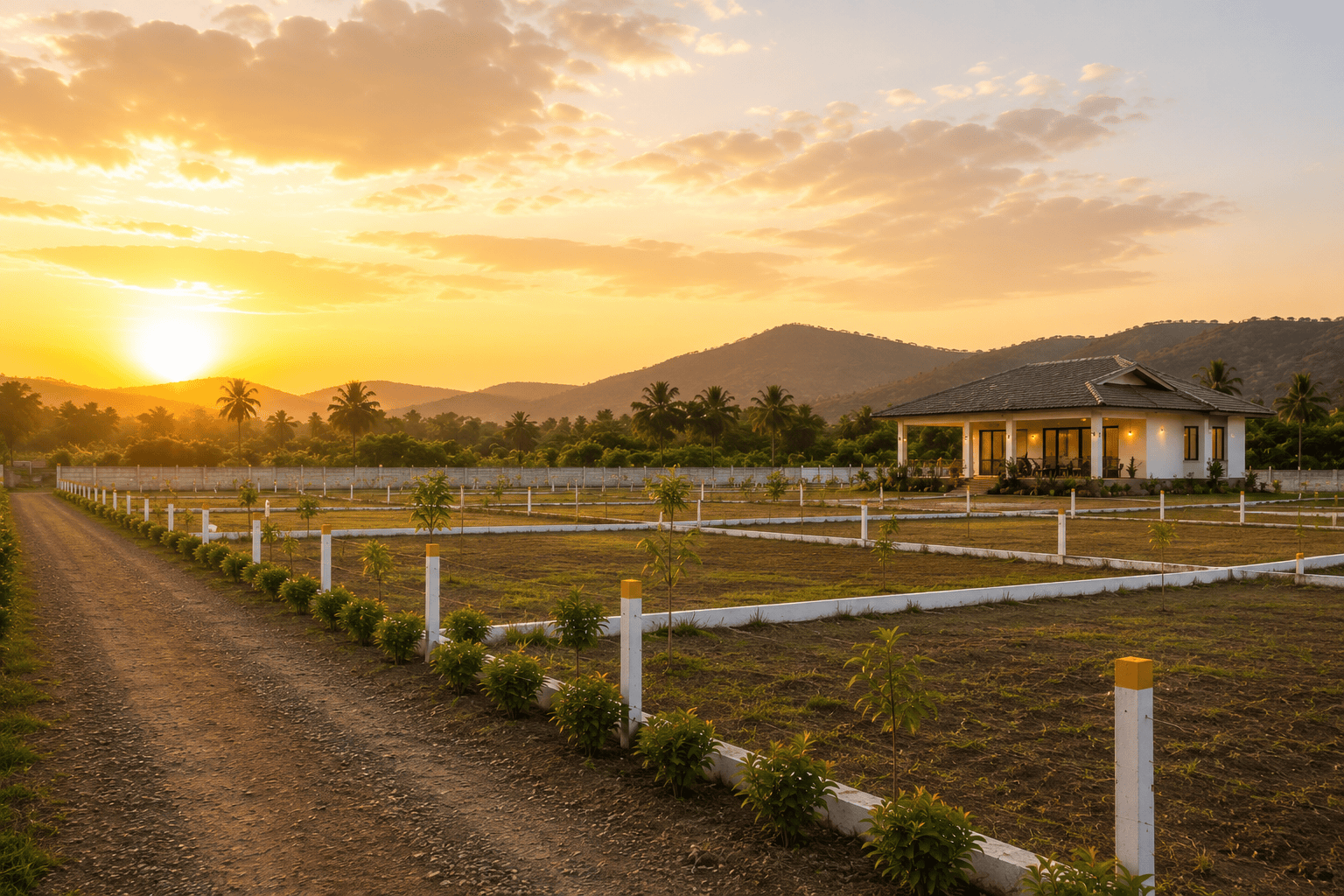
Buying a farmhouse plot near Pune sounds simple until you actually start looking — and then three names keep coming up: Bhor, Velhe, and Sinhagad Road. Each belt has its own character, its own pricing pattern, and its own set of things to double-check before you sign anything. This guide walks through all three, along with the land-classification and legal basics that apply no matter which belt you choose.
Why Buy a Farmhouse Plot Near Pune?
Farmhouse plots appeal to two very different kinds of buyers — those looking for a weekend retreat away from the city, and those treating it as a long-term land investment. Both groups are drawn to the same basic trade-off: land further from central Pune costs meaningfully less per guntha, while still being close enough for a comfortable drive. Bhor, Velhe and Sinhagad Road have all become popular precisely because they sit in that sweet spot.
Understanding Farmhouse Land Classification
Before comparing locations, it helps to understand what you're actually buying. Farmhouse land near Pune generally falls into one of three categories:
- NA (Non-Agricultural) converted land: Officially converted by the Collector's office for non-agricultural use, generally permitting construction within defined limits.
- Regularized gunthewari land: Historically developed in smaller guntha-sized parcels without formal layout approval, later regularized under state gunthewari rules.
- Raw agricultural land: Not converted or regularized — cannot legally be built upon for residential use until it goes through the appropriate process.
Bhor, Velhe & Sinhagad Road: A Quick Overview
| Belt | Approx. Distance from Pune | Character |
|---|---|---|
| Sinhagad Road | 15–30 km | Shortest commute; more developed pockets closer to the city |
| Velhe | 30–45 km | Hilly, scenic terrain near the Sinhagad fort range |
| Bhor | 35–45 km | Taluka headquarters with better civic infrastructure nearby |
Distances vary by exact village, and travel time along ghat roads can differ significantly from straight-line distance. Always confirm the specific gaon (village) name and do a trial drive before evaluating a plot.
Sinhagad Road: Closest to the City
Land along the outer stretch of Sinhagad Road, including areas around Hingne Khurd, offers the shortest drive back into Pune. This convenience typically comes at a price premium compared to Velhe or Bhor, especially for road-touch plots.
Velhe: Scenic and Mid-Range
Velhe sits further out but is popular for its hilly, green surroundings close to the Sinhagad fort range — a common draw for buyers prioritizing a genuine weekend-getaway feel over commute time.
Bhor: Closer to Civic Infrastructure
As a taluka headquarters, land near Bhor town benefits from proximity to markets, schools and basic healthcare that more remote farmhouse pockets lack. Plots further from the town centre revert to a more typical rural profile.
What Drives Pricing in This Belt?
Farmhouse plot pricing near Pune is shaped by a handful of consistent factors, regardless of which of the three belts you're considering:
- Road frontage: Main-road-touch plots command a clear premium over interior plots.
- Terrain: Table-top (flat, buildable) land costs more than sloped land requiring levelling.
- Layout vs. raw land: Planned farmhouse layouts with demarcation and internal roads typically cost more per guntha than raw agricultural parcels.
- Distance and access: Shorter, better-maintained approach roads generally support higher pricing.
Because rates shift with market conditions and vary meaningfully even within the same village, always request a current per-guntha rate directly from the seller and compare at least two or three plots before deciding.
The Legal Checklist Before You Book
- 7/12 Extract: Confirms current ownership and land classification.
- NA Order or Gunthewari Regularization: Confirms what construction is legally permitted.
- Title Chain: Ownership history, ideally verified by a property lawyer.
- Encumbrance Certificate: Confirms the land is free of loans or pending litigation.
- Layout Approval: If part of a larger scheme, confirm the layout itself is sanctioned.
- Road Access & Water in Writing: Don't rely on verbal assurances — get them documented.
Construction Rules to Keep in Mind
Farmhouse construction norms typically limit the permissible built-up area relative to plot size, and may include setback requirements from boundaries and roads. These rules vary by classification and local authority, so confirm the exact permissible construction for your specific plot — don't assume it matches a neighbouring property, even one that looks similar.
Site Visit Checklist
Once the paperwork looks clean, walk the plot boundaries in person, confirm demarcation markers match the layout plan, and check the approach road condition yourself. Ask sellers for an on-site demonstration of a working water source rather than a verbal claim, and if possible, visit once in dry weather and once during or right after monsoon.
Common Mistakes to Avoid
- Assuming "farmhouse plot" automatically means construction-ready NA land.
- Booking based on a broker's description without seeing the 7/12 extract yourself.
- Overlooking water source verification because the surrounding scenery looks lush.
- Not checking whether a layout (if any) is itself sanctioned.
- Paying a large token amount before a lawyer has reviewed the title chain.
Frequently Asked Questions
Final Word
Bhor, Velhe and Sinhagad Road each offer a genuinely different farmhouse-buying experience — the deciding factor should be how far you're willing to travel and what surroundings matter most to you, not price alone. Whichever belt you choose, the legal fundamentals stay the same: confirm land classification, verify every document, and see the site — and its water source — in person before you commit.

Vinod Pawar
Founder & Managing Director · Qualified Civil Engineer
Vinod brings hands-on experience in land development and legal due diligence across Maharashtra, and personally oversees documentation checks for every Aashraya Properties project.